
US-India Corridor Intelligence
The operating layer beneath US-India growth.
Corridor Intelligence is not geography, and it is not culture training. It is the layer of leadership, decision-making, and team behavior that decides whether cross-border growth holds together and compounds.
Corridor Intelligence Lens
- 01Power
Who feels able to speak, challenge, or decide?
- 02Trust
Where is confidence being earned, lost, or withheld?
- 03Decision-Making
How do decisions actually move?
- 04Execution Rhythm
Where do handoffs and follow-through create drag?
- 05Leadership Credibility
What makes leaders trusted across distance?
- 06Commitment Signals
What behaviors show real ownership?
For US acquirers, PE operating partners, GCC sponsors, CHROs, country leaders.
What is Corridor Intelligence?
We call this corridor intelligence: a practical read of how culture, trust, and decision-making actually work between your US and India teams.
AptCulture reads these patterns across the US-India corridor and global markets, then puts that read to work for leaders carrying cross-border decisions.
US-India is our strongest suit. It is not a cage. The same questions of trust, decision rhythm, and operating culture travel into global teams beyond the corridor.
- It is operating intelligence, not geography. The corridor is how an enterprise actually runs across borders.
- It is diagnostic before prescriptive. Recommendations are sourced from signals, not templates.
- It is leader-grade. The output is usable in sponsor, board, and executive committee conversations.
Corridor signal view
India leadersDiagnose. Advise. Build across the operating layer.
Corridor Intelligence is useful only when it changes how leaders read the system, make decisions, and build the rhythms that hold across distance.
- 01
- Diagnose
Where awareness training stops, and corridor work begins.
Global culture frameworks and communication training do an important job: they build awareness. Corridor Intelligence picks up where that leaves off, with the operating decisions, the moments where trust is built, and the leadership-readiness questions a sponsor is weighing next.
Corridor Intelligence is built for the second conversation. It is the one a CEO, sponsor, or country leader has after the awareness workshop is over and the operating problem is still there.
- · Where do decisions actually slow down?
- · Which leadership pairs are losing trust?
- · What is the GCC sponsor reading that no one is naming?
- · Which integration risks are behavioral, not structural?
- · What does "ready" look like at the next stage?

Where corridor risk surfaces in real organizations.
Corridor risk rarely arrives labeled. It shows up as small patterns in handoffs, escalations, and decision rights that compound into integration drag, GCC plateau, and leadership-readiness gaps.

Post-deal integration drag
Cultural and leadership signals stall the first 90 days; early value goes into rework that a clearer first 90 days would save.

GCC ready for the next stage
Reliable delivery is there. The next step is the sponsor confidence that comes before strategic ownership.

Leadership handoffs go quiet
Handoffs across functions and time zones can lose context, and capable leaders can look slower than they are. Clearer handoffs fix that.

Decision rights blur across the corridor
Authority is technically clear but practically ambiguous, slowing escalation and ownership.
Stakeholder expectations diverge
Global stakeholders and the teams can run against different scoreboards. Naming the shared one brings them together.

Performance expectations mismatch
Reviews, ratings, and recognition systems do not match the cross-border behaviors actually being asked for.
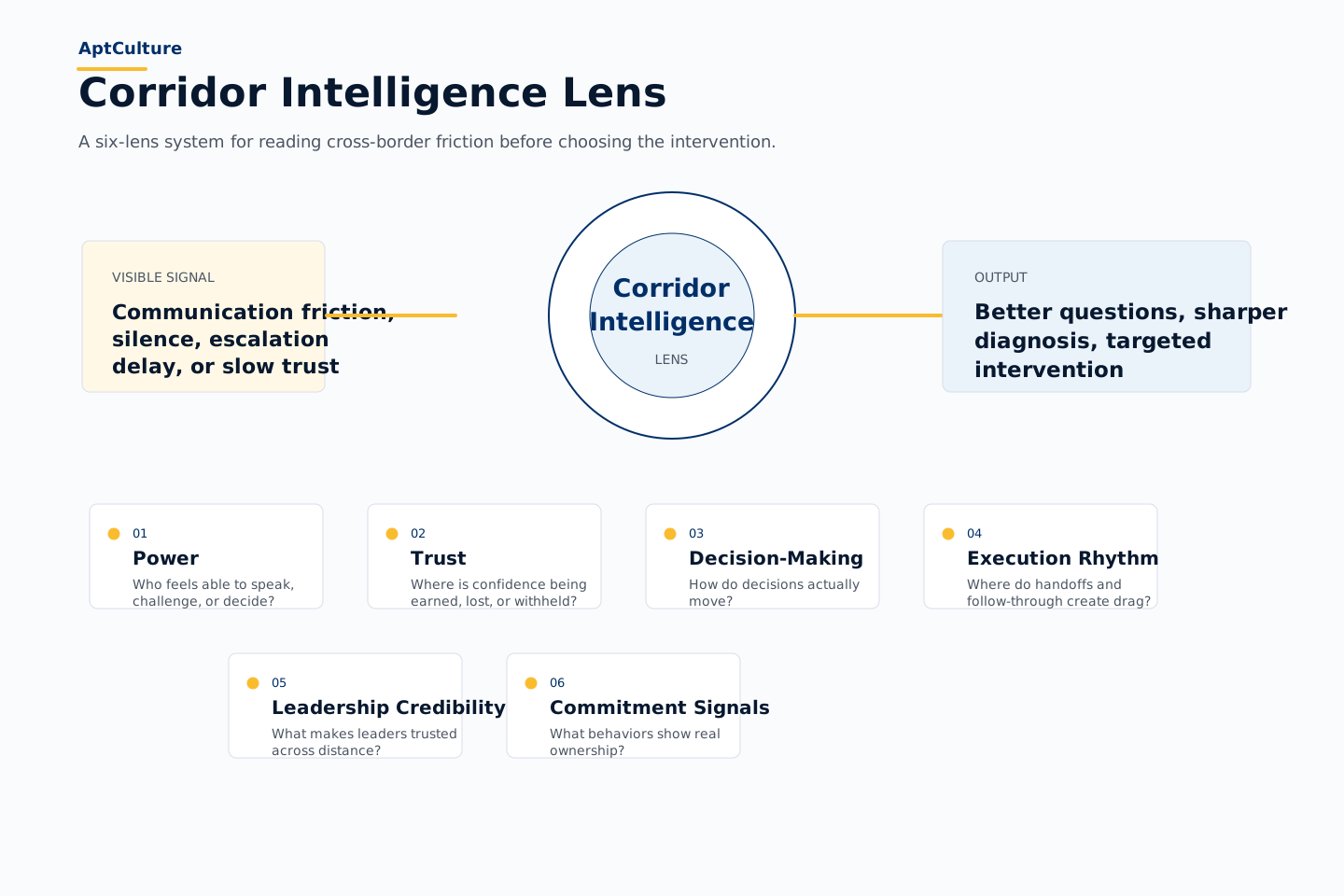
The AptCulture Corridor Intelligence Lens.
Six operating lenses used in diagnostics, M&A integration plans, and GCC readiness reviews to surface the signals leaders cannot see from one side of the corridor.
- 01
Power
Who feels able to speak, challenge, decide, delay, or resist.
- 02
Trust
Where confidence is being earned, lost, or withheld.
- 03
Decision-making
How choices actually move through the business.
- 04
Execution rhythm
Where handoffs, meetings, and follow-through create drag.
- 05
Leadership credibility
What makes leaders believed across distance when tension rises.
- 06
Commitment signals
What people do after alignment is declared.
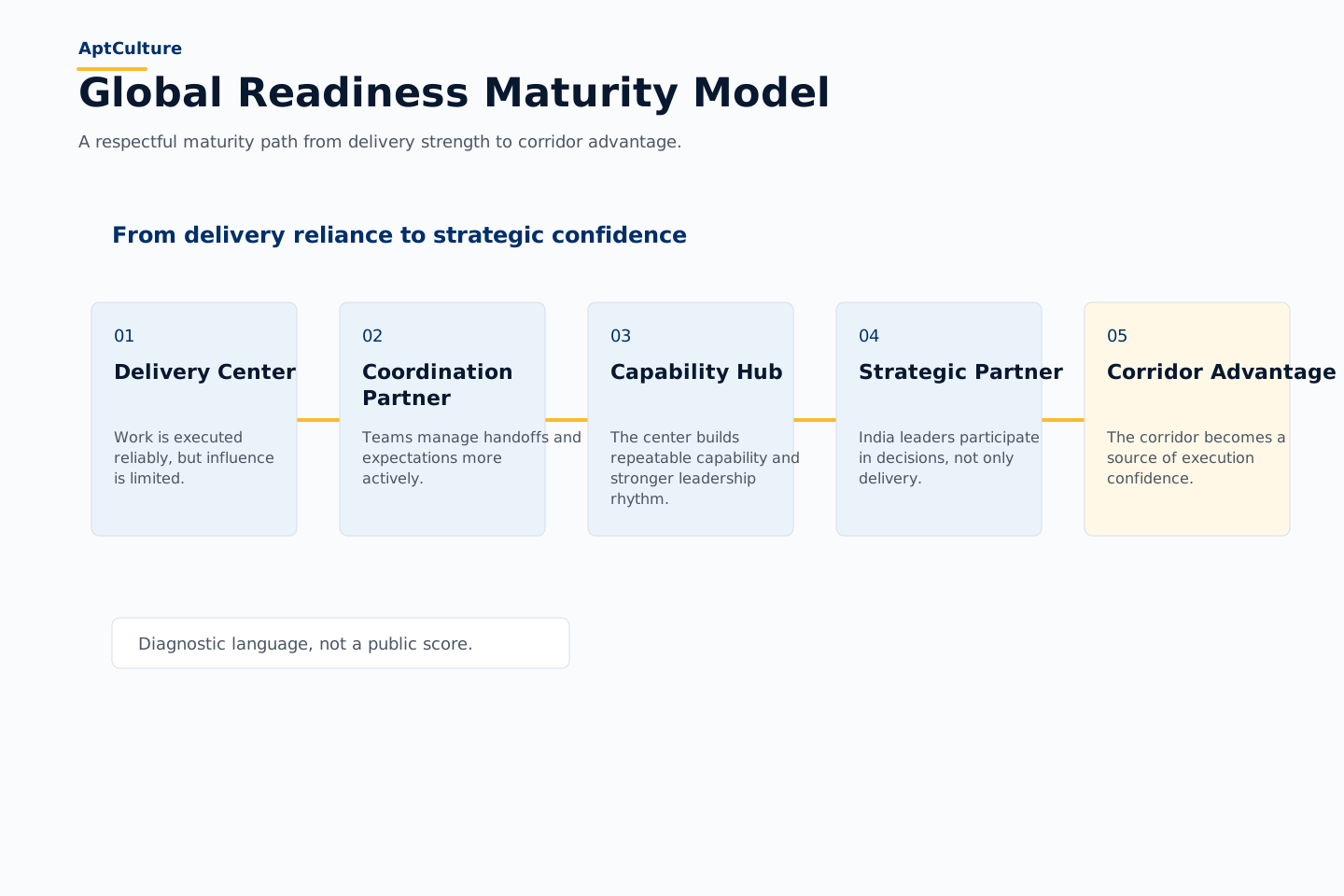
Global Readiness Maturity Model.
A staged read of where an organization actually sits: from reliable delivery to a corridor that creates execution confidence.
Used with sponsors and CHROs to set a defensible next stage, not a generic aspiration.
- Stage 01
Delivery Center
Work is executed reliably, but influence is limited.
- Stage 02
Coordination Partner
Teams manage handoffs and expectations more actively.
- Stage 03
Capability Hub
The center builds repeatable capability and stronger leadership rhythm.
- Stage 04
Strategic Partner
India leaders participate in decisions, not only delivery.
- Stage 05
Corridor Advantage
The corridor becomes a source of execution confidence.
Where is the corridor showing up in your work?
Five entry points for the leaders who carry the corridor most visibly. Each routes into the right advisory lane.
M&A Cultural Integration

For U.S. acquirers & PE operating partners
Protecting deal value across U.S.-India integration. Sponsor-aligned integration plan grounded in cultural due diligence and leadership-pair stabilization.
Explore M&A integration →GCC Performance & Global Readiness
For GCC sponsors & country leaders
Moving a GCC from delivery reliability to strategic capability. A diagnosed readiness path the sponsor and country leader can defend.
Explore GCC readiness →L&D Solutions for Business Problems
For CHROs & L&D leaders
Translating a business problem into a diagnostic-led intervention. Behavior-change, learning, coaching, and reinforcement designed against the outcome.
Explore L&D for business problems →People Performance
For India leaders & functional heads
Building leadership, manager, and team capability for cross-border execution. Capability system that turns leadership intent into corridor execution.
Explore People Performance →Custom L&D Architecture

For founders, boards & sponsors
A bespoke leadership and learning architecture around a real business need. An owned architecture (not a course catalog) built around the corridor.
Explore Custom L&D →
A growing set of briefings.
A growing set of briefings. We add them as the work surfaces something worth writing down.
Includes AptCulture practice patterns where approved, plus public datasets and cited sources. No unverified claims.
Public briefings stay separate from private client patterns, so discretion remains intact while the thinking continues to develop.

What senior leaders are actually asking.
Common executive-grade questions across M&A integration, GCC performance, and people performance, surfaced from current advisory conversations.
Tell us what you're working through.
A senior advisor will read it and respond personally. No pitch decks, no sales sequences. Just a useful first conversation about the decision in front of you.