








Skip to content
Engagement · GCC Performance & Global Readiness · For global sponsors and India GCC leaders

Cross-Border Team Effectiveness

Fix the operating rhythm so the work moves at one speed across the corridor, not two — fewer dropped handoffs, earlier escalation, and reliability that's visible to HQ.

  • ForGlobal functional leaders, project sponsors, India GCC & delivery leads
  • Best whenMissed handoffs · avoided conflict · late escalation · agreement that won't convert to action
  • EngagementFacilitated team engagement + operating-rhythm design
  • DeliveryUS–India · Global + India

Leaders we've trained come from Goldman Sachs, Citi, Accenture, J&J and more · 20+ yrs · 60+ ICF/SIETAR-certified coaches.

Stakes

The problem this solves

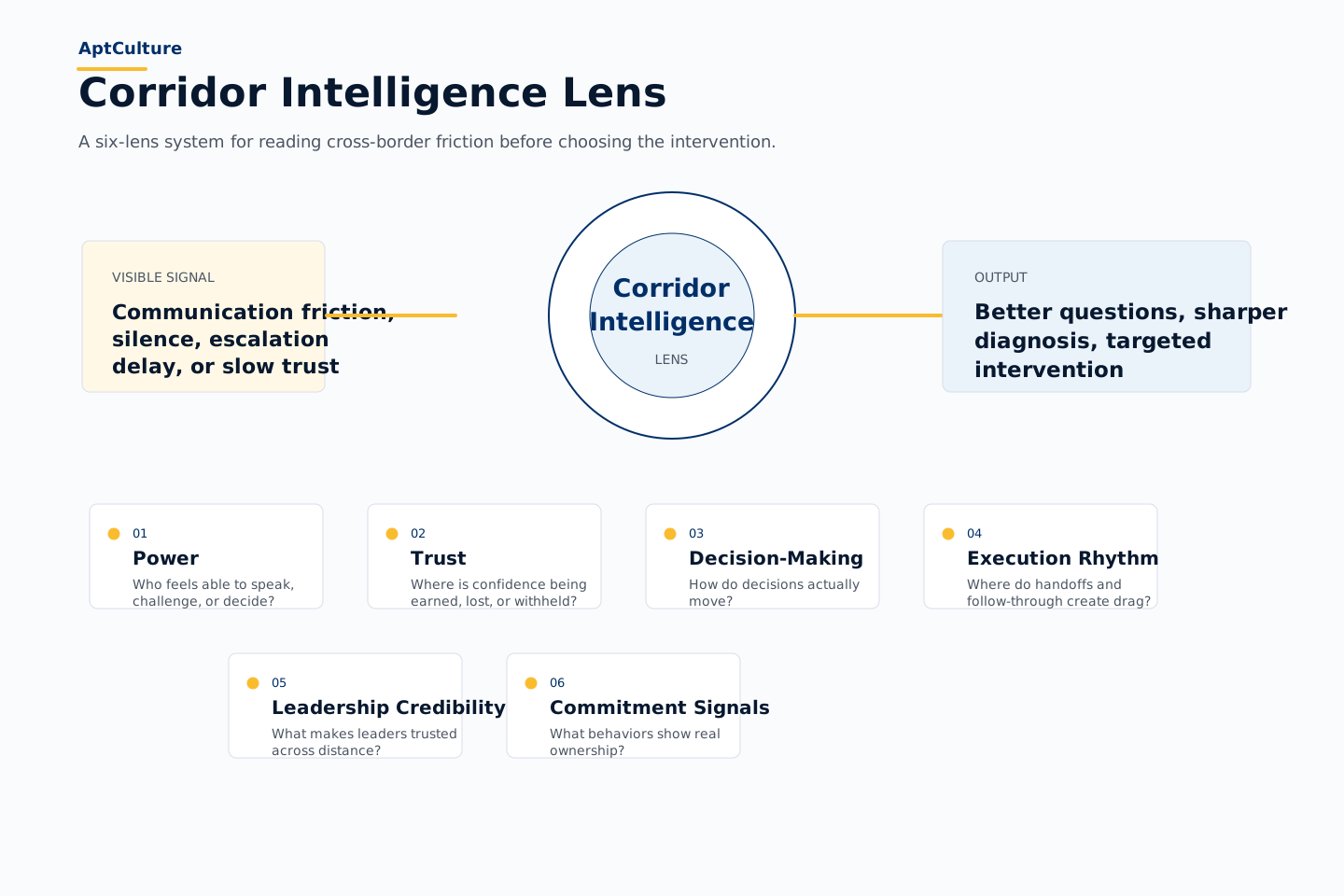
It's easy to read delay as a capability or effort problem — it shows up when distributed teams miss handoffs, avoid conflict, or take too long to turn agreement into action. Usually the real issue is unclear authority, mismatched communication norms, and a cadence that was never designed across geographies. Teams read silence as agreement and politeness as a "yes," and speed leaks quietly. For the India team, one late escalation can cost more trust than a missed number.

Signals you'll recognize

  • Handoffs land late or incomplete, and no one names why.
  • Disagreement with HQ gets avoided, so risk surfaces too late.
  • "Yes" in the meeting doesn't become action after it.
  • Two time zones, two speeds — and the gap reads as the India team's reliability.
Decision fit

Where this has leverage

Best used when there is a real operating moment, sponsor question, or leadership transition behind the request.

Strong fit

  • You lead or sponsor a distributed team that's capable but losing speed to friction.
  • You're a global functional lead, project sponsor, or India delivery lead whose handoffs and escalations aren't clean across time zones.
  • You want an operating rhythm the team keeps using after we leave — not more oversight.

Less useful when

  • The gap is genuinely skills or headcount, not trust and rhythm.
  • The team isn't actually interdependent across geographies.
  • You're looking for a one-off intercultural workshop rather than behavior change.
What changes

What changes — and how we work.

How we startStarts with a team-effectiveness scan — stakeholder interviews, a meeting-and-handoff review, and a cross-border friction map.

Operating signals

  • Clearer handoffs — fewer dropped or late ones across the corridor.
  • Better disagreement rhythm — conflict surfaced and handled, not avoided.
  • Faster escalation — risk raised before it's expensive.
  • Stronger trust signals and execution routines across locations.

Delivery model Facilitated team intervention with operating-rhythm design, practice, and sponsor review.

Proof

Why leaders choose AptCulture for this.

Over two decades · 60+ certified coaches (ICF, SIETAR) across US / India / EU / APAC · Wiley Everything DiSC® partner · ICF & SIETAR USA member · Women- & Minority-owned.

Leaders we've trained come from

  • Accenture logo
  • Amdocs logo
  • Citigroup logo
  • Smiths Group logo
  • Virtusa logo
  • Wipro logo
  • Mastercard logo
  • Goldman Sachs logo

Client pattern

Global IT services firm integrating an acquired team.

Business context

Global IT services firm integrating an acquired team. Cross-border insecurity and process friction were tanking customer service and deadlines — slow processes read as roadblocks, and the team went quiet. We ran a cultural gap analysis, DISC-based transition communication, and the 3Cs (Culture, Change, Communication) group training with executive and group coaching, so the team learned to escalate early and hand off cleanly.

Operating signal

client escalations cleared in a record ~12 weeks; projected annual revenue protected — by fixing the operating rhythm, not adding oversight.

Impact is read through meeting quality, handoff reliability, escalation timing, stakeholder confidence, and sponsor-approved execution signals. Impact is read through sponsor-approved behavior and operating signals.
FAQ

Program FAQ

GCC Performance & Global Readiness · US–India Corridor

Move at one speed across the corridor.

Get the brief, or talk through where your team is losing speed — and trust — to friction.